

Hymenal remnants, clinically known as hymenal caruncles and commonly referred to as hymenal tags, are small pieces of tissue that remain at the edges of the vaginal opening after the hymen tears. They are harmless, relatively common, and largely asymptomatic, many women have them and never know it. For others, however, they can be a source of ongoing discomfort during intercourse, physical activity, or tampon use. In some cases, remnant tissue protrudes visibly at the vaginal opening, which can also be a source of self-consciousness about the appearance of the area. Understanding what hymenal remnants are, what causes them, and what options are available is the first step toward making an informed decision about your own comfort and well-being.
Key Takeaways
-
🧬 Hymenal remnants are common and usually harmless - Hymenal remnants, also called hymenal caruncles or hymenal tags, are small pieces of tissue left at the edges of the vaginal opening after the hymen tears and heals.
-
🚴 They can form from many causes, not just intercourse - The hymen may tear from tampon use, sports, cycling, horseback riding, gymnastics, normal anatomy changes, or sexual activity. The way it heals determines whether remnant tissue remains.
-
⚠️ Symptoms vary from none to ongoing discomfort - Many women never notice hymenal remnants, but others may experience irritation, pain with intercourse, tampon discomfort, friction during activity, visible protruding tissue, or minor changes in menstrual flow or discharge.
-
🩺 A professional evaluation is important if anything seems unusual - Tissue near the vaginal opening is not always a hymenal remnant. Vaginal polyps, cysts, skin tags, or other benign growths can look similar, so a gynecologist or urogynecologist should evaluate symptoms like pain, bleeding, discharge, rapid changes, or obstruction.
-
✂️ Removal is the only permanent treatment when symptoms are bothersome - Hymenal remnants do not typically go away on their own. If they cause discomfort or self-consciousness, hymenal remnant removal, or hymenectomy, is a quick minimally invasive procedure, and once removed, the tissue does not grow back.
What Causes Hymenal Remnants?
The hymen is a thin, delicate membrane located just inside the vaginal opening. Despite what many people believe, it rarely disappears completely after tearing. Instead, it heals around the edges, and in many cases leaves behind small fragments of tissue. These fragments are what we call hymenal remnants or hymenal caruncles. Understanding how they form starts with understanding how and why the hymen tears in the first place.
How the Hymen Tears
The hymen can tear for a variety of reasons, and sexual activity is just one of them. It is common to see patients whose hymens tore during tampon use, physical activity such as gymnastics, cycling, or horseback riding, or simply as a result of normal anatomical changes over time. The way the hymen tears, and how much tissue remains afterward, varies from one woman to another depending on the thickness, shape, and flexibility of the hymenal tissue itself. Some women experience a clean tear that leaves minimal remnants. Others are left with more irregular fragments that can vary in size, number, and placement around the vaginal opening.
Incomplete or Partial Hymenal Tear
In some cases, the hymen does not tear completely, resulting in portions of the membrane remaining partially intact alongside irregularly torn tissue. This is sometimes referred to in medical literature as incomplete or defective defloration, though it can occur in any situation where the hymen is only partially torn, not exclusively during first intercourse. Women in this situation may experience ongoing discomfort without fully understanding why, and may not immediately recognize that hymenal remnant tissue is the source of their discomfort.
In more significant cases, partially intact hymenal tissue can also affect the normal outflow of menstrual blood and vaginal secretions. For many women this interference is minor and goes largely unnoticed. For others, it becomes more significant over time, causing noticeable discomfort, irregular flow, or a sense that something is not quite right.
When remnant tissue is the primary cause of the obstruction, hymenal remnant removal can often resolve the issue effectively. However, when the interference is more pronounced or involves more structurally intact tissue, a professional evaluation by a gynecologist is the recommended first step to determine the most appropriate course of action.
Incomplete defloration is more common than many people realize, and understanding it is an important part of recognizing why hymenal remnants form and persist long after the initial tear.
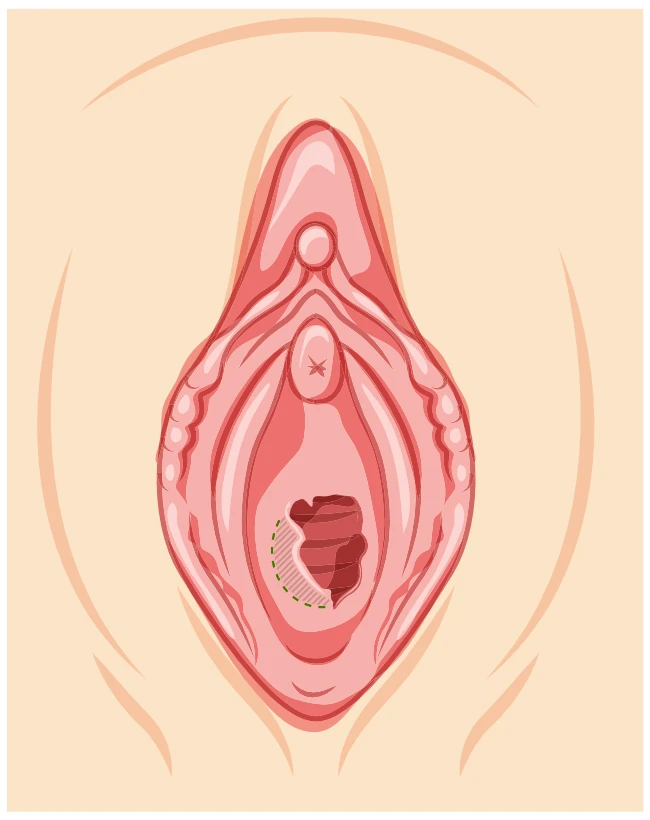
How Do Hymenal Remnants Present?
Hymenal remnants and hymenal caruncles do not look or feel the same from one woman to another. The way they present depends on several factors, including the amount of tissue left behind, where it is located around the vaginal opening, and how the tissue has changed over time. Some women notice them immediately after a tear. Others become aware of them years later, either because the tissue has changed or simply because they are paying closer attention to their bodies.
Protruding and Prolapsed Hymenal Tags
The most commonly noticed presentation is protruding hymenal tags, small, irregular pieces of tissue that project outward from the edges of the vaginal opening. These are often visible to the naked eye and may feel like soft, fleshy bumps around the opening. In some cases, the tissue descends further forward, a presentation referred to as prolapsed hymenal tags, where the remnant extends noticeably outside the vaginal opening. Both presentations can cause friction and irritation during intercourse, physical activity, or tampon use, and may also be a source of self-consciousness about the appearance of the area.
Fibrotic or Hardened Remnant Tissue
Not all hymenal remnants are soft. In some cases, remnant tissue can become fibrotic over time, meaning it thickens and hardens as a result of repeated irritation, inflammation, or simply as part of the natural healing process. Hardened hymenal remnants may not be as visually prominent as protruding tags, but they can cause significant discomfort during intercourse or tampon insertion due to their rigidity. Women with fibrotic remnant tissue sometimes describe a persistent feeling of resistance or discomfort that does not resolve on its own, and may not immediately associate it with hymenal tissue at all.
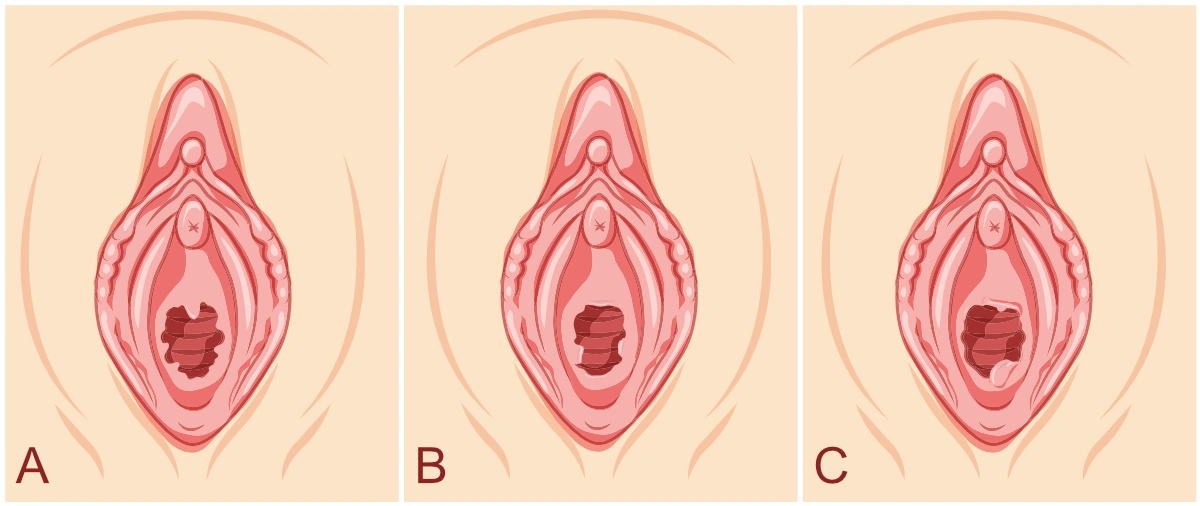
Signs You May Have Hymenal Remnants
Because hymenal remnants are largely asymptomatic, many women are unaware they have them. They may be discovered incidentally during a routine gynecological exam, or a woman may notice them herself while becoming more familiar with her own anatomy. For others, the signs are more noticeable and have been present for some time without a clear explanation.
Some of the most common signs that hymenal caruncles or hymenal tags may be present include:
- Recurring discomfort or irritation during intercourse that does not have an obvious cause
- Difficulty or discomfort during tampon insertion or removal
- Visible tissue at the edges of the vaginal opening that feels soft, irregular, or out of place
- A feeling of resistance or friction during physical activity such as cycling, horseback riding, or gymnastics
- Noticeable changes in the appearance of the vaginal opening following a hymen tear, whether from intercourse, tampon use, or physical activity
- Minor interference with menstrual flow or vaginal discharge that feels unusual or inconsistent
It is important to note that these signs do not automatically confirm the presence of hymenal remnant tissue. Several other conditions can present in a similar way, including vaginal polyps, cysts, or other benign growths. If you are unsure about what you are experiencing, a professional evaluation is always the recommended first step, which leads us to an important question many women have when they first notice something unusual.
Can Hymenal Remnants Go Away on Their Own?
This is one of the most common questions women have after discovering hymenal remnant tissue, and the short answer is no. Unlike minor skin irritations or small wounds that heal and resolve with time, hymenal caruncles and hymenal tags are composed of living tissue that has already completed its healing process. The remnants that remain after the hymen tears are not in the process of dissolving or receding, they are simply what is left behind after the tissue healed around the tear.
In some cases, hymenal remnants may appear to change over time. Soft, pliable tags can become fibrotic or thickened with repeated irritation, making them more noticeable rather than less. Hormonal changes associated with pregnancy, breastfeeding, or menopause can also affect the texture and sensitivity of remnant tissue, sometimes making previously unnoticed remnants more apparent.
It is a common misconception that the hymen disappears entirely after tearing. In reality, the tissue heals and shrinks back to some degree, but irregular remnant tissue that does not fully recede is a natural and relatively common outcome of that healing process. Waiting for hymenal tags to resolve on their own is unlikely to produce results, and for women whose remnants are causing ongoing discomfort or self-consciousness, hymenal remnant removal is the most reliable and effective solution available.
Are These Hymenal Remnants or Something Else?
Noticing unfamiliar tissue at or around the vaginal opening can understandably cause concern. While hymenal remnants and hymenal caruncles are among the most common explanations, they are not the only possibility. Several other benign conditions can present in a similar way, and knowing the differences can help guide the next steps.
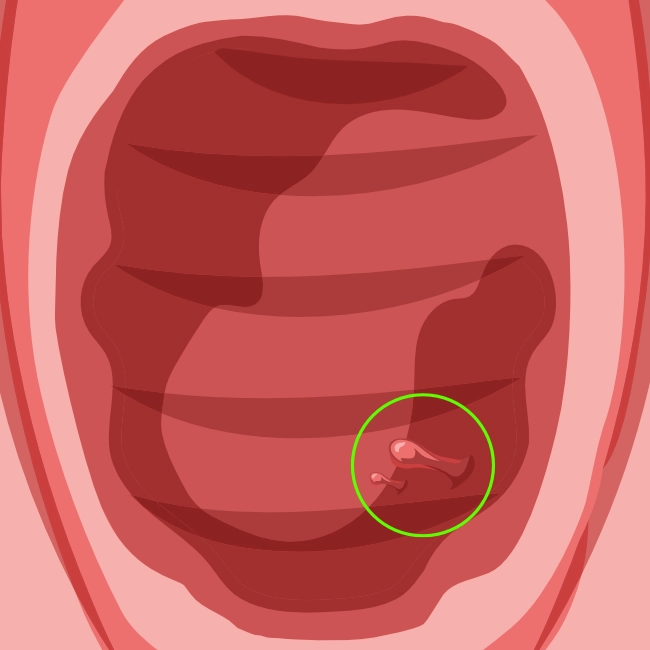
Vaginal polyps are soft, elongated growths that can develop on the walls of the vagina or at the vaginal opening. Like hymenal tags, they may be soft to the touch and largely asymptomatic, but they originate from the vaginal wall rather than the hymenal tissue at the edges of the opening. Bartholin gland cysts are another common benign condition, presenting as round, fluid-filled swellings on either side of the vaginal opening rather than along its edges. Skene gland cysts are similar in nature but located near the urethra. Vaginal skin tags can also develop in the area and may closely resemble prolapsed hymenal tags in appearance.
The key difference between hymenal remnants and these other conditions lies in their location, origin, and texture. Hymenal remnants are found specifically at the edges of the vaginal opening, where hymenal tissue would naturally be present. They are typically irregular in shape and vary in number, reflecting the uneven way the hymen tears and heals.
That said, self-diagnosis in this area is not recommended. If you are uncertain about what you are experiencing, or if the tissue is accompanied by pain, bleeding, unusual discharge, or rapid changes in size or appearance, a thorough evaluation by a gynecologist or urogynecologist is the appropriate first step. A qualified specialist can accurately identify the source of the tissue and recommend the most appropriate course of action before any cosmetic or corrective procedure is considered.
When to See a Gynecologist or Urogynecologist
As a general guideline, consider scheduling an evaluation with a specialist if:
- You are unsure whether what you are experiencing is hymenal remnant tissue or another condition
- The tissue is accompanied by unusual discharge, bleeding, or rapid changes
- You have a history of congenital hymenal abnormalities such as imperforate, microperforate, septate, or cribriform hymen
- Your concerns involve significant obstruction of menstrual flow or vaginal secretions
- You are experiencing symptoms that do not align with the typical presentation of hymenal remnants
Once any underlying concerns have been evaluated and cleared, women whose discomfort or self-consciousness is related specifically to hymenal remnant tissue may be good candidates for hymenal remnant removal.
Treatment Options for Hymenal Remnants
For women whose hymenal remnants are causing ongoing discomfort, irritation, or self-consciousness, the good news is that treatment is straightforward, effective, and minimally invasive. There is no cream, medication, or non-surgical intervention that will dissolve or eliminate hymenal tag tissue once it has formed. Surgical removal is the only reliable and permanent solution.
It is worth noting that not every woman who has hymenal remnants needs treatment. For those whose remnants are completely asymptomatic and cause no concern about appearance, monitoring and leaving them in place is a perfectly valid choice. Treatment is most appropriate when remnants are affecting quality of life, whether through physical discomfort, interference with daily activities, or self-consciousness about the appearance of the area.
Hymenal Remnant Removal (Hymenectomy)
Hymenectomy for Hymenal Remnant Removal is the surgical procedure performed to remove excess or prolapsed hymenal tag tissue from the vaginal opening. It is a quick, minimally invasive in-office procedure typically completed in under an hour, performed under local anesthesia for your comfort throughout. During the procedure, the excess hymenal caruncle tissue is carefully identified and removed using precise surgical techniques, with close attention to tissue handling to ensure a clean, natural-looking result. Dissolvable sutures are used to close the area where needed, supporting smooth healing and a refined appearance. Downtime is minimal, and most patients return to light daily activities shortly after their procedure.
For women in the Dallas/Fort Worth area who are experiencing discomfort or self-consciousness related to hymenal remnant tissue, we invite you to contact our office to schedule a private, confidential consultation with Dr. Cocco. Our team is happy to answer your questions, evaluate your concerns, and determine whether hymenal remnant removal is the right approach for your specific situation. Contact our office using the following form to take the first step toward feeling comfortable and confident.
Can Your Hymen Grow Back After a Hymenectomy?
This is a question that comes up often, and it is completely understandable. After going through a procedure to address hymenal remnant tissue, it is natural to wonder whether the tissue could return over time.
The short answer is no. Once hymenal remnants are surgically removed, they do not grow back. Unlike some soft tissue that can regenerate after partial removal, the excised hymenal tag tissue is permanently eliminated. The body heals the treated area, but it does not reproduce the removed tissue.
What can occasionally cause confusion is the normal healing process itself. In the weeks following hymenectomy, the treated area goes through a natural healing response that may involve some swelling, minor tissue changes, or the formation of scar tissue as the incision closes. This is a temporary part of recovery and should not be mistaken for the return of hymenal remnants. Following all post-operative care instructions provided by your surgeon is the most effective way to support smooth healing and ensure the best possible outcome.
It is also worth noting that hymenectomy addresses existing hymenal remnant tissue at the time of the procedure. It does not prevent future changes to the surrounding vaginal tissue that may occur as a result of hormonal shifts, aging, or other factors over time. However, the specific hymenal caruncles or hymenal tags that were removed during the procedure will not return.
Conclusion
Hymenal remnants, known clinically as hymenal caruncles and commonly referred to as hymenal tags, are a natural and relatively common outcome of the healing process after the hymen tears. For most women they are completely harmless and require no intervention. For others, they can be a persistent source of physical discomfort, irritation, or self-consciousness that affects everyday comfort and quality of life.
Understanding what hymenal remnants are, how they form, and what options are available is an important first step toward making an informed decision about your own well-being. Whether you choose to leave them in place or explore hymenal remnant removal, that decision should always be yours, made from a place of accurate information, realistic expectations, and personal comfort.
If you have concerns about hymenal remnant tissue or are unsure about what you are experiencing, a consultation with a qualified medical professional is always the recommended first step toward finding the clarity and relief you deserve.
Frequently Asked Questions (FAQs)
Is It Normal to Have Hymenal Remnants?
Yes, hymenal remnants are relatively common and completely normal. After the hymen tears, it rarely disappears entirely. In many cases, small fragments of tissue remain at the edges of the vaginal opening as a natural result of the healing process. Many women have hymenal caruncles or hymenal tags without ever knowing it, as they are largely asymptomatic and may never cause any discomfort or concern. Their presence does not indicate anything abnormal about a woman's anatomy or health.
Should Hymenal Tags Be Removed?
Not necessarily. Hymenal tags that are completely asymptomatic and cause no concern about appearance do not require removal. Many women choose to leave them in place without any impact on their quality of life. Removal is most appropriate when hymenal remnants are causing ongoing discomfort during intercourse, physical activity, or tampon use, when prolapsed hymenal tags are affecting the appearance of the vaginal opening, or when the tissue has become fibrotic or irritated over time. Ultimately, the decision to pursue hymenal remnant removal is a personal one based on your own comfort, concerns, and goals.
What Is the Surgery to Remove Hymenal Remnants?
The surgical procedure performed to remove hymenal remnants or hymenal caruncles is called a hymenectomy, also referred to as hymenal remnant removal. It is a quick, minimally invasive in-office procedure performed under local anesthesia, typically completed in under an hour. The excess tissue is carefully excised using precise surgical techniques, and dissolvable sutures are used to close the area where needed. Downtime is minimal, and most patients return to light daily activities shortly after their procedure.
How Long Does Recovery Take After Hymenal Remnant Removal?
Recovery from hymenectomy is generally straightforward. Most patients are able to return to light daily activities within a day or two of their procedure. Mild discomfort and minor swelling in the treated area are expected in the first few days and can be managed with prescribed or recommended medications. Sexual activity and tampon use should be avoided for a minimum of six weeks or until your surgeon confirms complete healing at your follow-up appointment. Following all post-operative care instructions carefully is the most effective way to support smooth healing and the best possible outcome.
Can Hymenal Remnants Cause Recurrent UTIs or Infections?
This is not widely discussed in patient-facing medical content, but it is a valid question. Prolapsed or protruding hymenal tags can create small folds and crevices around the vaginal opening that are more difficult to keep clean during normal hygiene routines. These folds can potentially harbor bacteria, which may contribute to localized irritation or, in some cases, recurrent urinary tract infections in women who are already prone to them. That said, hymenal remnant tissue is just one of many possible contributing factors to recurrent UTIs, and it is important not to assume it is the cause without a proper evaluation. Women experiencing recurrent UTIs or persistent localized irritation are encouraged to discuss all potential contributing factors with their gynecologist to ensure an accurate diagnosis before pursuing any corrective procedure.
About The Author

Jennyfer Faridy Cocco, MD
Board-Certified Plastic Surgeon
Dr. Cocco is a Female Plastic Surgeon practicing in Dallas / Fort Worth since 2009. She is constantly refining her skills in cosmetic surgery by training with internationally renowned aesthetic surgeons through various traveling apprenticeships. Dr. Cocco also regularly attends seminars and conventions, both in the U.S. and Europe. She continues her education and stay up-to-date with the latest advances in the medical and cosmetic field.