


Aesthetic and Functional Surgical Procedure to Correct a Deviated Septum
People who struggle with breathing or feel their noses look a bit off, at some point start researching for ways to correct it. Whether searching online, consulting doctors, or talking with friends, they quickly come across a handful of terms: rhinoplasty, rhinoseptoplasty, septoplasty, septorhinoplasty, and some others. Which term appears often depends on the specific issues to be corrected, the doctor’s specialty, and the terminology preferred by each individual doctor.
Despite the different words, these procedures aim to straighten a crooked or deviated septum and, when needed, improve the nose’s shape and function. The aim of this post is to help you understand the specifics of each term, what sets them apart, who typically performs these procedures, and how to decide which specialist is right for your needs.
Key Takeaways
-
👃 Definitions and Focus: Rhinoseptoplasty and septorhinoplasty refer to the same combined procedure that corrects both the nasal septum deviation (functional) and reshapes the nose (cosmetic). Septoplasty focuses solely on correcting a deviated septum to improve breathing without altering the nose's appearance.
-
🏥 Specialist Roles: Otolaryngologists (ENT specialists) primarily perform septoplasty for functional breathing issues, while plastic surgeons typically handle rhinoseptoplasty/septorhinoplasty because it includes cosmetic reshaping in addition to functional correction.
-
🔄 Treatment Sequence: Major functional nasal problems should be evaluated and treated first by an ENT specialist. After these issues are resolved, a plastic surgeon can address cosmetic refinements along with minor functional adjustments if needed.
-
⚖️ When to See Which Specialist: If breathing problems (e.g., difficulty breathing, snoring, sinus infections) are present, start with an ENT evaluation. For purely cosmetic concerns without significant functional problems, a board-certified plastic surgeon is appropriate.
-
💡 Importance of Understanding Terms: Knowing the differences affects your choice of specialist, expected outcomes, insurance coverage (functional corrections may be covered; cosmetic procedures usually are not), and ensures you get the right treatment tailored to your needs.
Rhinoseptoplasty and Septorhinoplasty
Rhinoseptoplasty and Septorhinoplasty refer to the exact same combined procedure, involving Rhinoplasty and Septoplasty. Rhinoplasty is a cosmetic surgical procedure performed mainly by plastic surgeons to reshape or improve the appearance of the nose. Septoplasty, on the other hand, focuses on correcting a deviated or crooked septum to improve breathing function.
The difference in which term you see mostly comes down to linguistic preference and sometimes the clinical focus of the surgeon. Some surgeons use one or the other based on their training or how they want to market their services to patients, either emphasizing the "rhino-" (aesthetic side) or the "septo-" (the functional side).
In many medical contexts, the term used reflects the primary focus of the surgery. That's why Septorhinoplasty is seen more often, as the functional correction of the septum is considered the foundational medical step before aesthetic reshaping.
This combined approach is typically performed by plastic surgeons specializing in aesthetics, requiring expertise in both functional and cosmetic nasal surgery. Because it simultaneously corrects internal septal deviation while refining the nose’s external appearance, it is a more complex procedure than either surgery performed alone.
However, rhinoseptoplasty (or septorhinoplasty) should only be considered after all complex functional issues have been thoroughly evaluated and managed by an Otolaryngologists (ENT specialists). The surgery will safely and effectively improve nasal function and appearance, but only once all underlying medical issues are resolved. In cases of minor airflow concerns, a board-certified plastic surgeon with the appropriate functional expertise may perform the procedure without involving an ENT.
Septoplasty - What it Means in Cosmetic Plastic Surgery
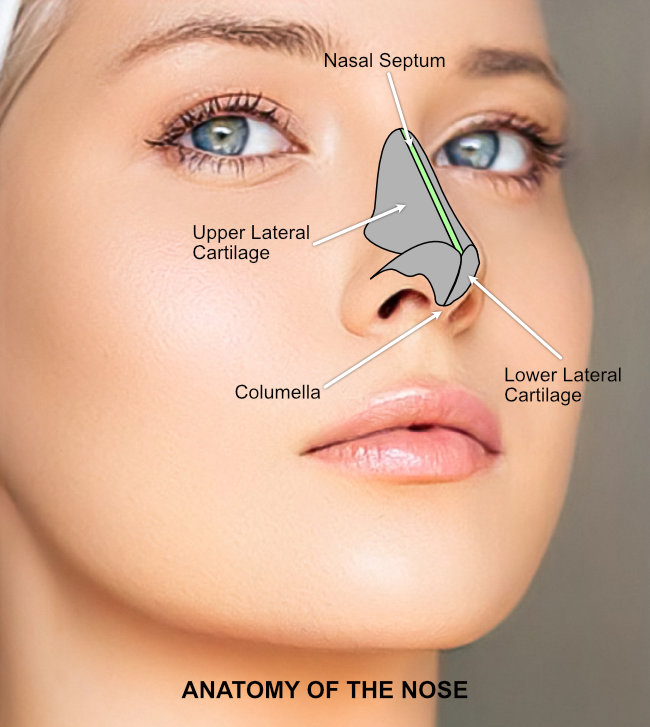
Septoplasty is also known as deviated septum surgery and nasal septum repair; these are synonymous terms referring to the surgical correction of a deviated nasal septum (the internal cartilage and bone partition dividing the nasal cavity). The primary goal is to restore nasal function. These procedures are typically performed by Otolaryngologists (ENT specialists) to address nasal obstruction, breathing difficulties, snoring, and recurrent sinus infections. These surgeries involve little to no cosmetic alteration of the external appearance of the nose.
When a cosmetic plastic surgeon performs septoplasty, it's generally within a broader rhinoseptoplasty context. Major functional issues are generally managed first by your ENT specialist. Any remaining minor functional concerns are then addressed simultaneously with cosmetic nasal reshaping, optimizing both form and function.
When to See an ENT Specialist and When You May Not Need One
When should you see an ENT specialist versus proceeding directly with a cosmetic plastic surgeon? If you're experiencing functional problems (difficulty breathing, snoring, recurrent sinus infections, or severe nasal obstruction) an ENT evaluation is essential before any cosmetic work begins. They'll address underlying medical concerns first, ensuring your airway functions properly.
However, if your goals are purely cosmetic, such as straightening your nose's appearance or refining its shape, and you're not experiencing significant breathing difficulties, you may not need an ENT referral. The first step is a consultation with a board-certified plastic surgeon, who will evaluate your case and determine if the issues are minor and can be safely addressed alongside your cosmetic nose surgery, or if your surgeon suspects that the functional issues run deeper or require specialized care and will refer you to an ENT specialist. After an ENT resolves any major medical issues, your plastic surgeon can then focus on cosmetic refinements, making minimal functional adjustments as needed, sometimes even right in the office.

Why Understanding These Terms Matters
Understanding whether you're pursuing functional correction, cosmetic refinement, or both isn't just a matter of semantics, it directly affects which specialist you'll see, what outcomes you can realistically expect, and how your procedure will be coded and covered (if at all) by insurance. Misidentifying your goals can land you in the wrong office entirely.
If your primary concern is breathing issues, an ENT is your starting point, not a cosmetic clinic. Functional correction of the septum might be covered by insurance, but cosmetic rhinoseptoplasty often is not. For example, in our practice, since the focus is on aesthetic correction, rhinoseptoplasty is generally not covered by insurance.
On the other hand, if you're seeking functional and aesthetic improvements after your medical concerns have been addressed, a rhinoseptoplasty with a cosmetically focused surgeon becomes the appropriate next step. At Cocco Clinique MD, we're transparent about this distinction: we address the cosmetic correction of nasal deviation, not deep structural pathology.
Conclusion & Next Steps
Though the terminology surrounding nasal surgery can seem interchangeable, the distinctions carry real clinical and practical weight. Knowing where rhinoseptoplasty ends and septoplasty begins helps you make informed, confident decisions about your care.
Your Next Step: If breathing issues are severe, consult an Otolaryngologist first; if cosmetic correction is your priority after functional concerns are managed, schedule a consultation at Cocco Clinique MD. During this consultation, we will evaluate your case to determine if you are a candidate for rhinoseptoplasty or if you need to see an ENT specialist for further assessment.
You deserve a tailored evaluation, one that honors both the functional and aesthetic aspects of your nasal health!
Frequently Asked Questions (FAQs)
How long does a rhinoseptoplasty take?
The surgery usually takes between 1.5 to 3 hours, depending on the complexity.
How long is the recovery for a combined procedure?
Initial recovery takes about 1 to 2 weeks, with most swelling and bruising improving during this time. Full healing can take several months.
Can you get a septoplasty and rhinoplasty at the same time?
Yes, rhinoseptoplasty combines septoplasty and rhinoplasty, they are often done together in a combined procedure to address both functional and aesthetic concerns.
Does insurance cover a combined rhinoseptoplasty?
Insurance typically covers the functional portion performed by an ENT specialist (the septoplasty) if it is medically necessary to fix breathing issues. However, the cosmetic portion (the rhinoplasty) is almost always an out-of-pocket expense.
About The Author

Jennyfer Faridy Cocco, MD
Board-Certified Plastic Surgeon
Dr. Cocco is a Female Plastic Surgeon practicing in Dallas / Fort Worth since 2009. She is constantly refining her skills in cosmetic surgery by training with internationally renowned aesthetic surgeons through various traveling apprenticeships. Dr. Cocco also regularly attends seminars and conventions, both in the U.S. and Europe. She continues her education and stay up-to-date with the latest advances in the medical and cosmetic field.